


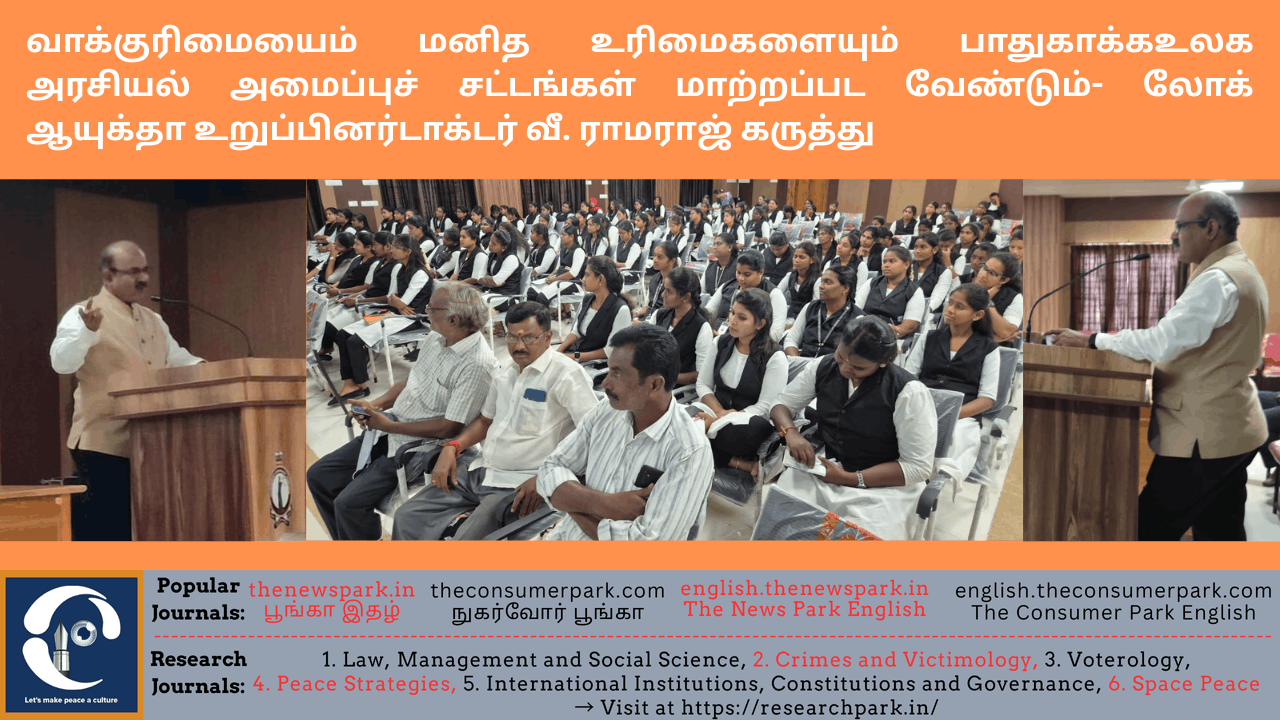
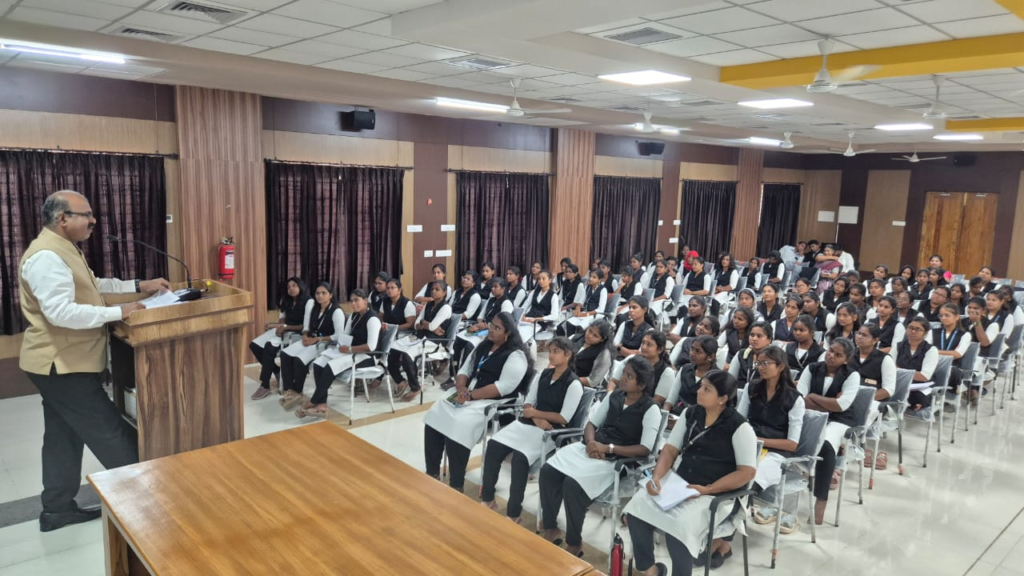
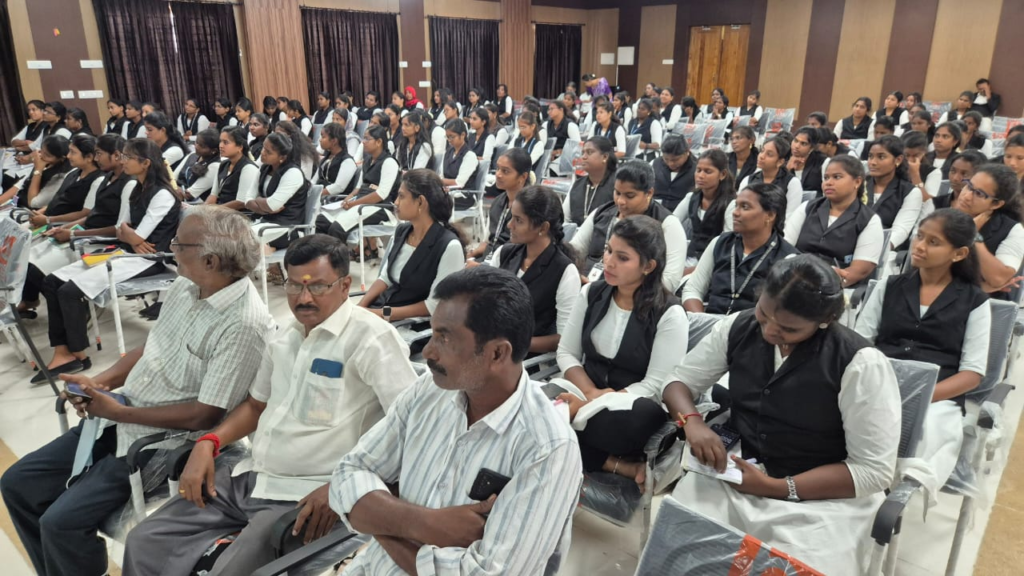
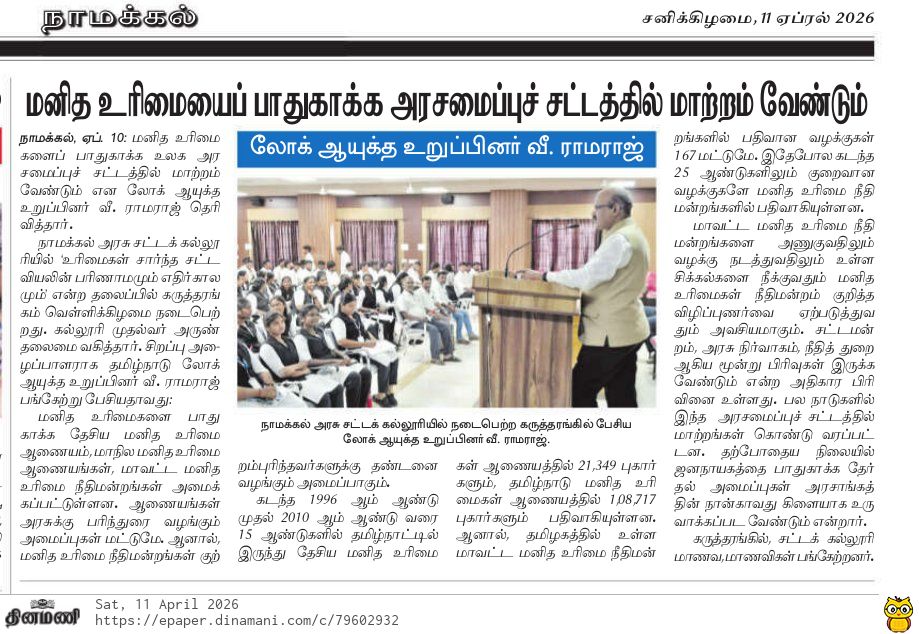
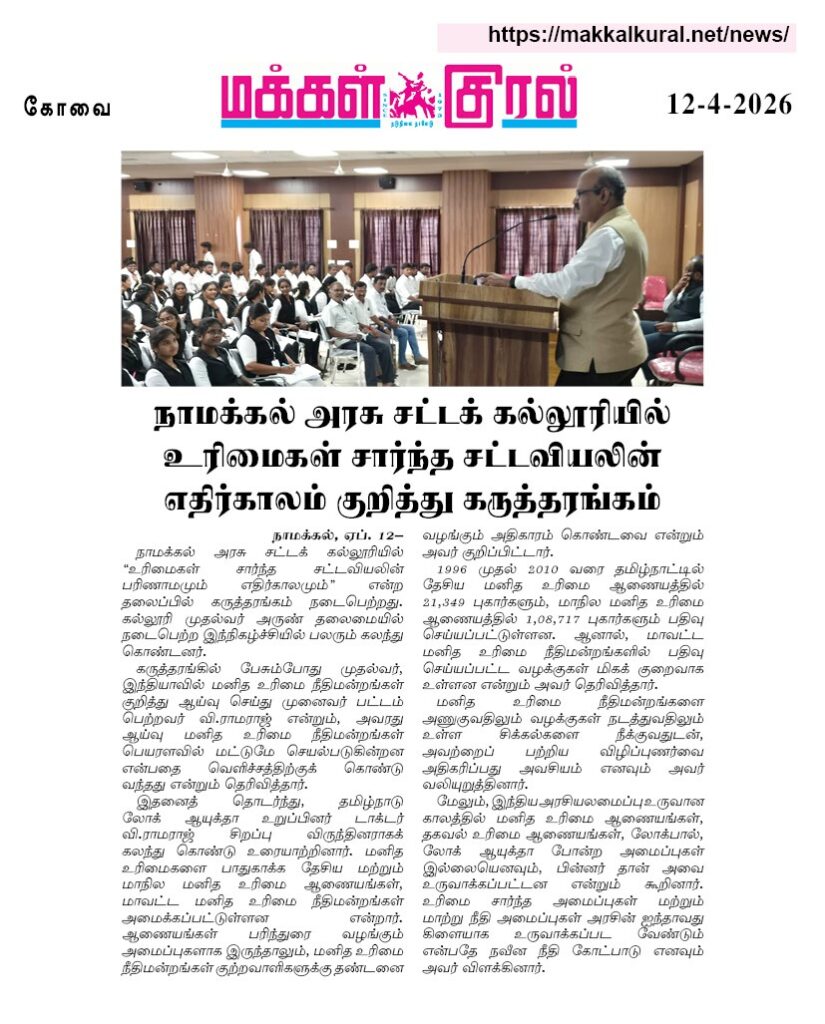
“உரிமைகள் சார்ந்த சட்டவியலின் பரிணாமமும் எதிர்காலமும்” என்ற கருத்தரங்கம் நாமக்கல் அரசு சட்டக் கல்லூரியில் முதல்வர் அருண் தலைமையில் நடைபெற்றது. மனித உரிமைகள், மனித உரிமைகள் சட்டம், மனித உரிமைகள் சர்வதேச சட்டம் போன்ற தலைப்புகளில் இந்தியாவில் பலர் ஆய்வு செய்து முனைவர் பட்டம் பெற்றுள்ளார்கள். ஆனால், இந்தியாவிலேயே முதலாவதாக மனித உரிமை நீதிமன்றங்கள் குறித்து ஆய்வு செய்து முனைவர் பட்டத்தை பெற்றவர் தற்போதைய தமிழ்நாடு லோக் ஆயுக்தா உறுப்பினர் டாக்டர் வீ ராமராஜ் ஆவார். மனித உரிமை நீதிமன்றங்கள் பெயரளவில் மட்டுமே இயங்கி வருவதை அவரது ஆய்வேடு வெளிச்சத்திற்குக் கொண்டு வந்ததது என தலைமை உரையில் கல்லூரி முதல்வர் தெரிவித்தார். படத்துக்கு கீழே செய்தி தொடர்கிறது
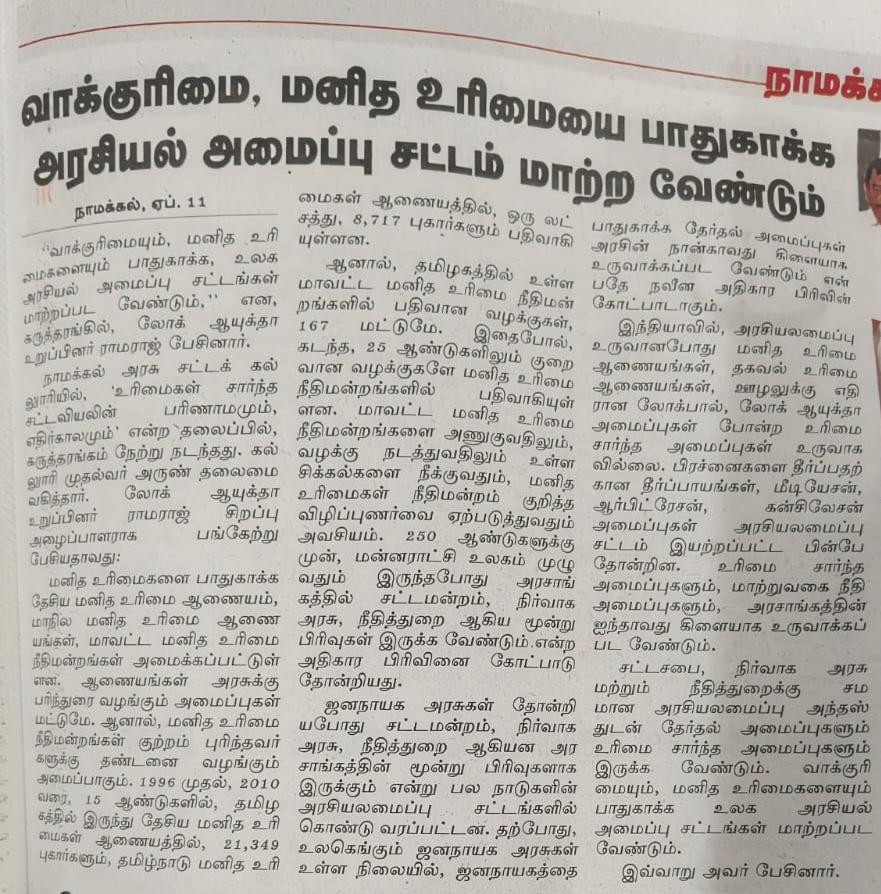
மனித உரிமைகளை பாதுகாக்க தேசிய மனித உரிமை ஆணையம், மாநில மனித உரிமை ஆணையங்கள், மாவட்ட மனித உரிமை நீதிமன்றங்கள் அமைக்கப்பட்டுள்ளன. ஆணையங்கள் அரசுக்கு பரிந்துரை வழங்கும் அமைப்புகள் மட்டுமே. ஆனால், மனித உரிமை நீதிமன்றங்கள் குற்றம் புரிந்தவர்களுக்கு தண்டனை வழங்கும் அமைப்பாகும். கடந்த 1996 ஆம் ஆண்டு முதல் 2010 ஆம் ஆண்டு வரை 15 ஆண்டுகளில் தமிழ்நாட்டில் இருந்து தேசிய மனித உரிமைகள் ஆணையத்தில் 21349 புகார்களும் தமிழ்நாடு மனித உரிமைகள் ஆணையத்தில் 108717 புகார்களும் பதிவாகியுள்ளன. ஆனால், தமிழகத்தில் உள்ள மாவட்ட மனித உரிமை நீதிமன்றங்களில் பதிவான வழக்குகள் 167 மட்டுமே. இதைப் போல கடந்த 25 ஆண்டுகளிலும் குறைவான வழக்குகளே மனித உரிமை நீதிமன்றங்களில் பதிவாகியுள்ளன. மாவட்ட மனித உரிமை நீதிமன்றங்களை அணுகுவதிலும் வழக்கு நடத்துவதிலும் உள்ள சிக்கல்களை நீக்குவதும் மனித உரிமைகள் நீதிமன்றம் குறித்த விழிப்புணர்வை ஏற்படுத்துவதும் அவசியமாகும் என்று கருத்தரங்கில் கலந்து கொண்ட தமிழ்நாடு லோக் ஆயுக்தா உறுப்பினர் டாக்டர் வீ. ராமராஜ் தெரிவித்தார்.
250 ஆண்டுகளுக்கு முன்னர் மன்னராட்சி உலகம் முழுவதும் இருந்தபோது அரசாங்கத்தில் சட்டமன்றம், நிர்வாக அரசு, நீதி துறை ஆகிய மூன்று பிரிவுகள் இருக்க வேண்டும் என்ற அதிகார பிரிவினை கோட்பாடு தோன்றியது. ஜனநாயக அரசுகள் தோன்றியபோது சட்டமன்றம், நிர்வாக அரசு, நீதித்துறை ஆகியன அரசாங்கத்தின் மூன்று பிரிவுகளாக இருக்கும் என்று பல நாடுகளின் அரசியலமைப்புச் சட்டங்களில் கொண்டு வரப்பட்டன. தற்போது உலகெங்கும் ஜனநாயக அரசுகள் உள்ள நிலையில் ஜனநாயகத்தை பாதுகாக்க தேர்தல் அமைப்புகள் அரசாங்கத்தின் நான்காவது கிளையாக உருவாக்கப்பட வேண்டும் என்பதே நவீன அதிகாரப் பிரிவினை கோட்பாடாகும் (Modern theory of Separation of Powers) என்று வீ. ராமராஜ் தெரிவித்தார்.
இந்தியாவில் அரசியலமைப்பு உருவானபோது மனித உரிமை ஆணையங்கள், தகவல் உரிமை ஆணையங்கள், ஊழலுக்கு எதிரான லோக்பால், லோக் ஆயுக்தா அமைப்புகள் போன்ற உரிமை சார்ந்த அமைப்புகள் உருவாகவில்லை. பிரச்சனைகளை தீர்ப்பதற்கான தீர்ப்பாயங்கள், மீடியேசன், ஆர்பிட்ரேசன், கன்சிலேசன் அமைப்புகள் அரசியலமைப்புச் சட்டம் இயற்றப்பட்ட பின்னரே தோன்றின. உரிமை சார்ந்த அமைப்புகளும் மாற்றுவகை நீதி அமைப்புகளும் அரசாங்கத்தின் ஐந்தாவது கிளையாக உருவாக்கப்பட வேண்டும் என்பதே நவீன நீதி கோட்பாடாகும் (Modern theory of Justice). சட்டமன்றம், நிர்வாக அரசு மற்றும் நீதித்துறைக்கு சமமான அரசியலமைப்பு அந்தஸ்துடன் தேர்தல் அமைப்புகளும் உரிமை சார்ந்த அமைப்புகளும் இருக்க வேண்டும் என்று வீ. ராமராஜ் தெரிவித்தார்.படத்துக்கு கீழே செய்தி தொடர்கிறது
பூங்கா இதழ் (The News Park) கருத்து: “அரசியலமைப்புச் சட்டங்களில் நான்காம் ஐந்தாம் பிரிவுகளை உருவாக்க வேண்டும் என்ற டாக்டர் வீரன் ராமராஜ் அவர்களின் கோட்பாடுகள் காலத்துக்கு ஏற்றவை ஆகும்”.
Global Constitutions Must Be Amended to Safeguard Voting Rights and Human Rights: Dr. V. Ramaraj, Member of Lokayukta
A seminar titled “The Evolution and Future of Rights-Based Jurisprudence” was held at the Government Law College, Namakkal, presided by Principal Arun. In his presidential address, the college Principal said that In India, many individuals have conducted research and obtained doctoral degrees in topics such as human rights in India, human rights law, and international human rights law; however, Dr. V. Ramaraj, a current member of the Tamil Nadu Lokayukta, holds the distinction of being the first person in India to earn a doctoral degree based on research specifically focused on Human Rights Courts and his thesis was groundbreaking because it exposed the “ghost” status of these courts.
Speaking at the seminar, Dr. V. Ramaraj, Member of the Tamil Nadu Lokayukta said that the National Human Rights Commission and the various State Human Rights Commissions serve solely as bodies empowered to offer recommendations to the government. Human Rights Courts, however, are institutions empowered to impose impriosonment upon those who have committed offenses. Between 1996 and 2010, a total of 21,349 complaints from Tamil Nadu were registered with the National Human Rights Commission, while 108,717 complaints were registered with the Tamil Nadu Human Rights Commission. Yet, during this same period, only 167 cases were registered in the District Human Rights Courts across Tamil Nadu. Similarly, over the past 25 years, a remarkably low number of cases have been registered in Human Rights Courts. He emphasized the imperative need to eliminate the procedural hurdles involved in accessing and litigating cases within District Human Rights Courts, as well as the necessity of raising public awareness regarding the existence and function of these courts.
Dr. V. Ramaraj further explained that 250 years ago—when monarchical rule prevailed across the globe—the “Theory of Separation of Powers” emerged, positing that a government should ideally comprise three distinct branches: the Legislature, the Executive, and the Judiciary. As democratic forms of government subsequently took root, the constitutions of numerous nations were framed to incorporate these three entities—the Legislature, the Executive, and the Judiciary—as the fundamental branches of governance. Dr. Ramaraj asserted that, in the contemporary global landscape where democratic governments are widespread, the “Modern Theory of Separation of Powers” advocates for the creation of electoral bodies as a fourth distinct branch of government, specifically for the purpose of safeguarding democracy itself (Democratic theory of Separation of Powers).
At the time the Constitution of India was framed, rights-based institutions—such as Human Rights Commissions, Right to Information Commissions, and anti-corruption bodies like the Lokpal and Lokayukta—did not exist. Tribunals for dispute resolution, as well as mechanisms for mediation, arbitration, and conciliation, emerged only after the enactment of the Constitution. The Modern Theory of Justice posits that rights-based institutions and alternative justice mechanisms should be established as a “fifth branch” of the government (Right-Justice based theory of Separation of Powers or Contemporary theory of Justice). V. Ramaraj asserted that electoral bodies and rights-based institutions should be accorded constitutional status on par with the Legislature, the Executive, and the Judiciary.