


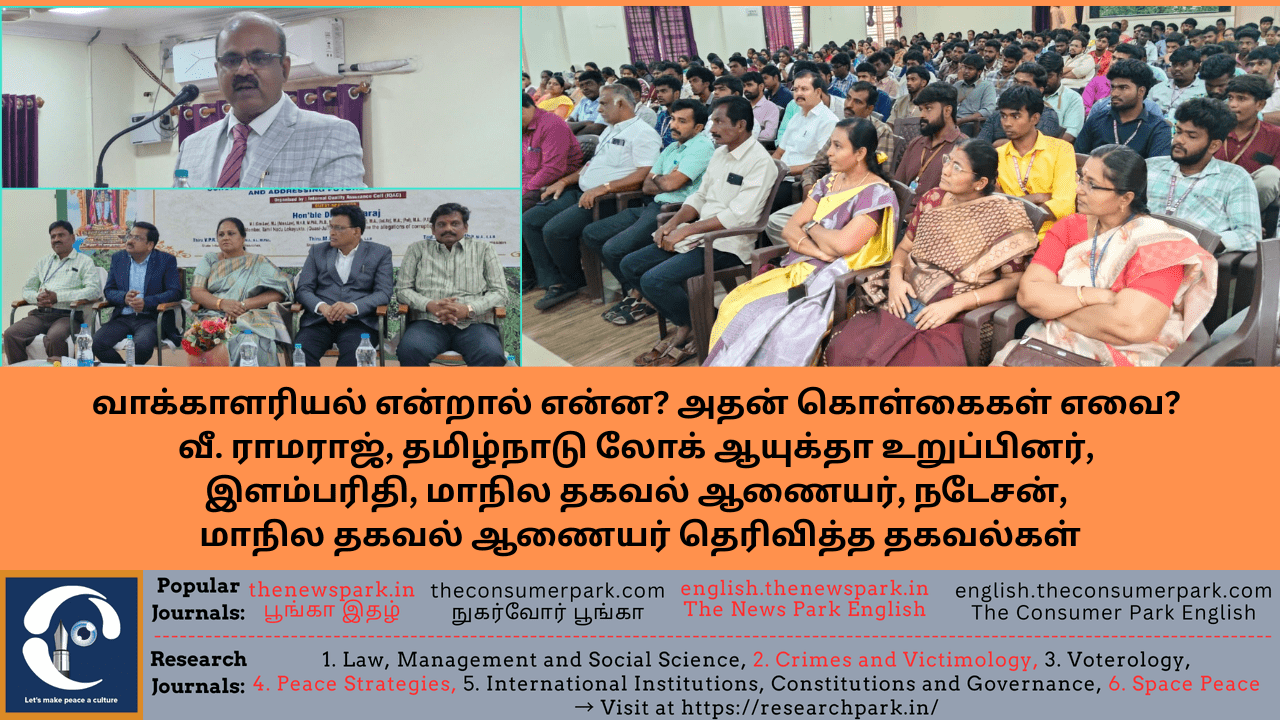
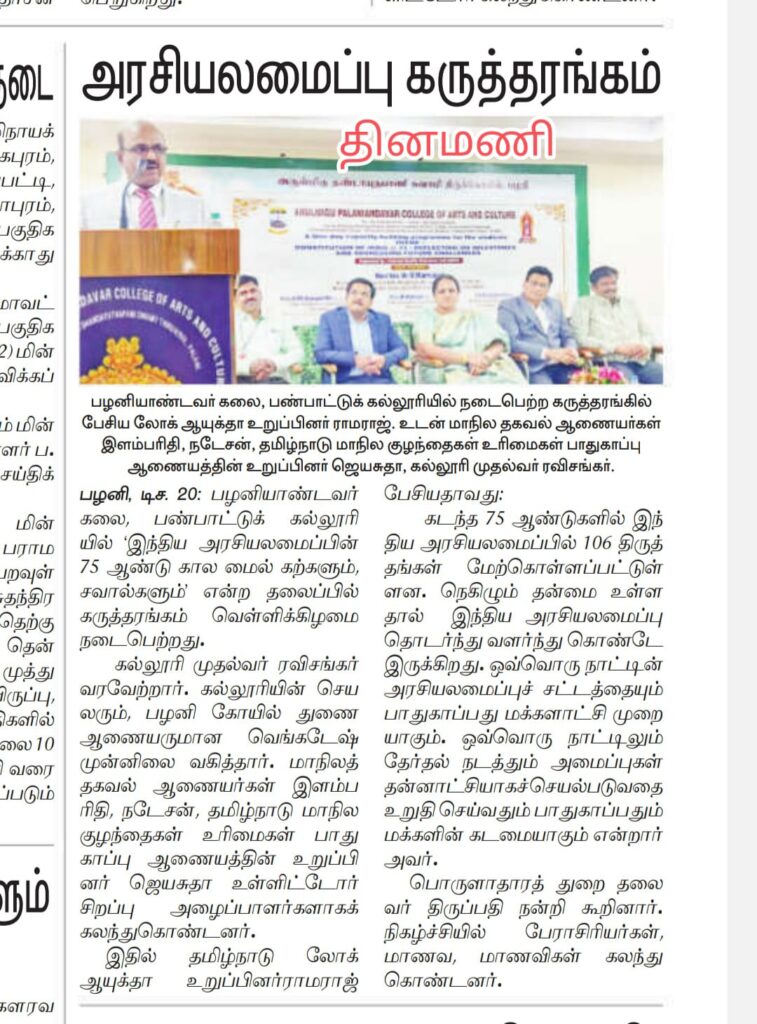
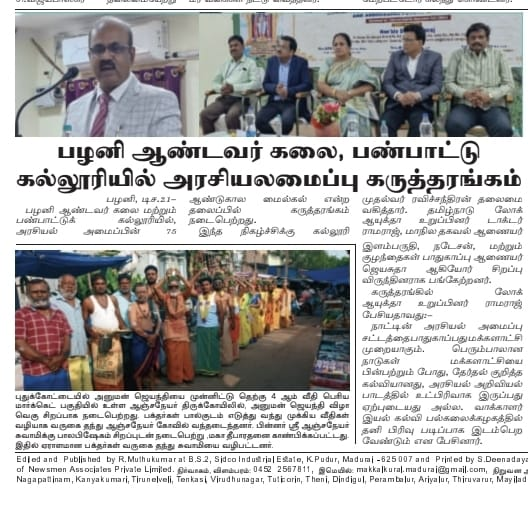
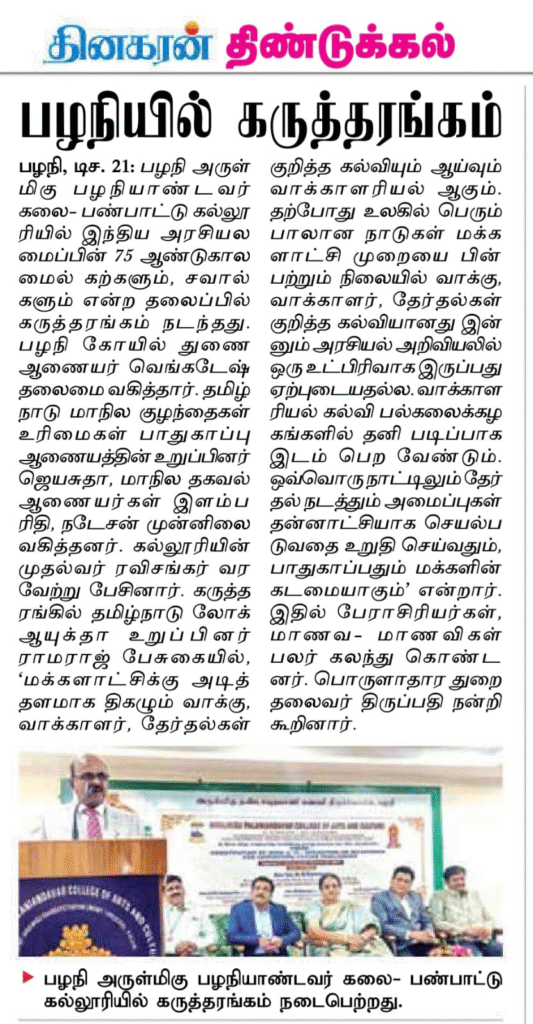
இந்திய அரசியலமைப்பின் 75 ஆண்டு ஆண்டு கால மைல் கற்களும் சவால்களும் என்ற தலைப்பில் பழனியாண்டவர் கலை மற்றும் பண்பாட்டுக் கல்லூரியில் /இந்து சமய அறநிலையத்துறையின் இணை ஆணையர் எஸ். மாரிமுத்து தலைமையில்/ இந்து சமய அறநிலையத்துறையின் துணை ஆணையர் ஆர் எஸ் வெங்கடேஷ் தலைமையில்/ கல்லூரியின் முதல்வர் டி. ரவிசங்கர்/ தலைமையில் நடைபெற்றது.
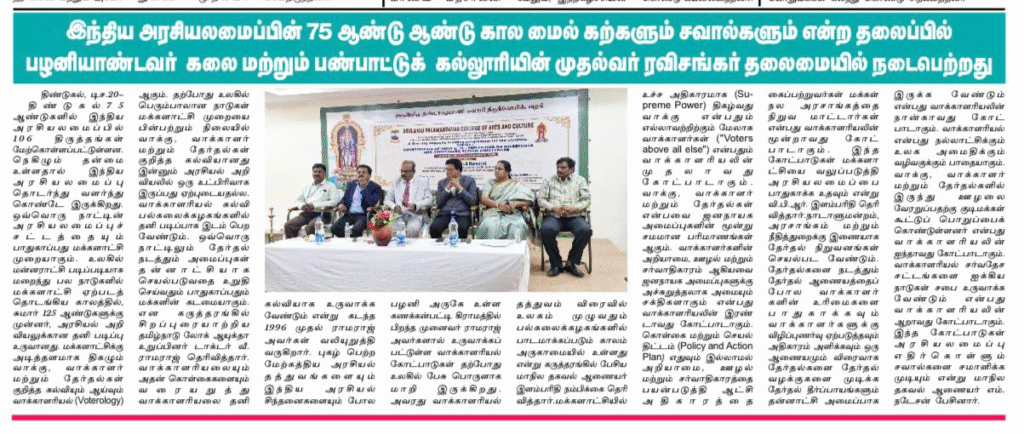
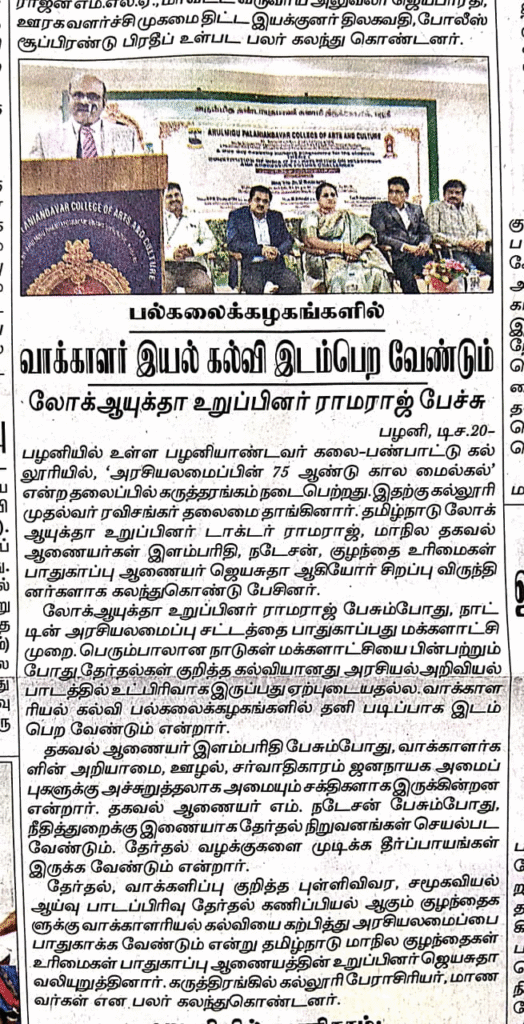
75 ஆண்டுகளில் இந்திய அரசியலமைப்பில் 106 திருத்தங்கள் மேற்கொள்ளப்பட்டுள்ளன. நெகிழும் தன்மை உள்ளதால் இந்திய அரசியலமைப்பு தொடர்ந்து வளர்ந்து கொண்டே இருக்கிறது. ஒவ்வொரு நாட்டின் அரசியலமைப்புச் சட்டத்தையும் பாதுகாப்பது மக்களாட்சி முறையாகும். உலகில் மன்னராட்சி படிப்படியாக மறைந்து பல நாடுகளில் மக்களாட்சி ஏற்படத் தொடங்கிய காலத்தில், சுமார் 125 ஆண்டுகளுக்கு முன்னர், அரசியல் அறிவியலுக்கான தனி படிப்பு உருவானது. மக்களாட்சிக்கு அடித்தளமாக திகழும் வாக்கு, வாக்காளர் மற்றும் தேர்தல்கள் குறித்த கல்வியும் ஆய்வும் வாக்காளரியல் (Voterology) ஆகும். தற்போது உலகில் பெரும்பாலான நாடுகள் மக்களாட்சி முறையை பின்பற்றும் நிலையில் வாக்கு, வாக்காளர் மற்றும் தேர்தல்கள் குறித்த கல்வியானது இன்னும் அரசியல் அறிவியலில் ஒரு உட்பிரிவாக இருப்பது ஏற்புடையதல்ல. வாக்காளரியல் கல்வி பல்கலைக்கழகங்களில் தனி படிப்பாக இடம் பெற வேண்டும். ஒவ்வொரு நாட்டிலும் தேர்தல் நடத்தும் அமைப்புகள் தன்னாட்சியாக செயல்படுவதை உறுதி செய்வதும் பாதுகாப்பதும் மக்களின் கடமையாகும். என கருத்தரங்கில் சிறப்புரையாற்றிய தமிழ்நாடு லோக் ஆயுக்தா உறுப்பினர் டாக்டர் வீ. ராமராஜ் தெரிவித்தார்.
வாக்காளரியலையும் அதன் கொள்கைகளையும் வரையறுத்து வாக்காளரியலை தனி கல்வியாக உருவாக்க வேண்டும் என்று கடந்த 1996 முதல் ராமராஜ் அவர்கள் வலியுறுத்தி வருகிறார். புகழ் பெற்ற மேற்கத்திய அரசியல் தத்துவங்களையும் இந்திய அரசியல் சிந்தனைகளையும் போல பழனி அருகே உள்ள கணக்கன்பட்டி கிராமத்தில் பிறந்த முனைவர் ராமராஜ் அவர்களால் உருவாக்கப்பட்டுள்ள வாக்காளரியல் கோட்பாடுகள் தற்போது உலகில் பேசு பொருளாக மாறி இருக்கிறது. அவரது வாக்காளரியல் தத்துவம் விரைவில் உலகம் முழுவதும் பல்கலைக்கழகங்களில் பாடமாக்கப்படும் காலம் அருகாமையில் உள்ளது என்று கருத்தரங்கில் பேசிய மாநில தகவல் ஆணையர் இளம்பரிதி நம்பிக்கை தெரிவித்தார்.
மக்களாட்சியில் உச்ச அதிகாரமாக (Supreme Power) திகழ்வது வாக்கு என்பதும் எல்லாவற்றிற்கும் மேலாக வாக்காளர்கள் (“Voters above all else”) என்பதும் வாக்காளரியலின் முதலாவது கோட்பாடாகும். வாக்கு, வாக்காளர் மற்றும் தேர்தல்கள் என்பவை ஜனநாயக அமைப்புகளின் மூன்று சமமான பரிமாணங்கள் ஆகும். வாக்காளர்களின் அறியாமை, ஊழல் மற்றும் சர்வாதிகாரம் ஆகியவை ஜனநாயக அமைப்புகளுக்கு அச்சுறுத்தலாக அமையும் சக்திகளாகும் என்பது வாக்காளரியலின் இரண்டாவது கோட்பாடாகும். கொள்கை மற்றும் செயல் திட்டம் (Policy and Action Plan) எதுவும் இல்லாமல் அறியாமை, ஊழல் மற்றும் சர்வாதிகாரத்தை பயன்படுத்தி ஆட்சி அதிகாரத்தை கைப்பற்றுவர்கள் மக்கள் நல அரசாங்கத்தை நிறுவ மாட்டார்கள் என்பது வாக்காளரியலின் மூன்றாவது கோட்பாடாகும். இந்த கோட்பாடுகள் மக்களாட்சியை வலுப்படுத்தி அரசியலமைப்பை பாதுகாக்க உதவும் என்று வி.பி.ஆர். இளம்பரிதி தெரிவித்தார்.
நாடாளுமன்றம், அரசாங்கம் மற்றும் நீதித்துறைக்கு இணையாக தேர்தல் நிறுவனங்கள் செயல்பட வேண்டும். தேர்தல்களை நடத்தும் தேர்தல் ஆணையத்தைப் போல வாக்காளர்களின் உரிமைகளை பாதுகாக்கவும் வாக்காளர்களுக்கு விழிப்புணர்வு ஏற்படுத்தவும் அதிகாரம் அளிக்கவும் ஒரு ஆணையமும் விரைவாக தேர்தல்களை தேர்தல் வழக்குகளை முடிக்க தேர்தல் தீர்ப்பாயங்களும் தன்னாட்சி அமைப்பாக இருக்க வேண்டும் என்பது வாக்காளரியலின் நான்காவது கோட்பாடாகும். வாக்காளரியல் என்பது நல்லாட்சிக்கும் உலக அமைதிக்கும் வழிவகுக்கும் பாதையாகும். வாக்கு, வாக்காளர் மற்றும் தேர்தல்களில் இருந்து ஊழலை வேரறுப்பதற்கு குடிமக்கள் கூட்டுப் பொறுப்பைக் கொண்டுள்ளனர் என்பது வாக்காளரியலின் ஐந்தாவது கோட்பாடாகும். வாக்காளரியல் சர்வதேச சட்டங்களை ஐக்கிய நாடுகள் சபை உருவாக்க வேண்டும் என்பது வாக்காளரியலின் ஆறாவது கோட்பாடாகும். இந்த கோட்பாடுகள் அரசியலமைப்பு எதிர்கொள்ளும் சவால்களை சமாளிக்க முடியும் என்று மாநில தகவல் ஆணையர் எம். நடேசன் பேசினார்.
தேர்தல் மற்றும் வாக்களிப்பு பற்றிய புள்ளிவிவர, சமூகவியல் அடிப்படையிலான ஆய்வுகளைக் குறித்த பாடப்பிரிவு தேர்தல் கணிப்பியல் (Psephology). வாக்கு வாக்காளர் மற்றும் தேர்தல்களை பாதுகாத்து மக்களாட்சி அமைப்புகளை பாதுகாக்க முனைவது வாக்காளரியலாகும். வாக்காளரியல் கோட்பாடுகளை பரப்புவதே வாக்காளரிலிமாகும் (Voterologism) என்பது வாக்காளரியலின் ஏழாவது கோட்பாடாகும். குழந்தைகளுக்கு வாக்காளரியல் கல்வியை கற்பித்து அரசியலமைப்பை பாதுகாப்போம் என்று கருத்தரங்கில் பேசிய தமிழ்நாடு மாநில குழந்தைகள் உரிமைகள் பாதுகாப்பு ஆணையத்தின் உறுப்பினர் ஜெயசுதா வலியுறுத்தினார்.
முன்னதாக கல்லூரியின் முதல்வர் டி ரவிசங்கர் வரவேற்புரை நிகழ்த்தினார் விழாவில் இந்து சமய அறநிலையத்துறையின் துணை ஆணையர் ஆர் எஸ் வெங்கடேஷ் வாழ்த்துரை வழங்கினார். பொருளாதார துறை தலைவர் பி. திருப்பதி நன்றியுரை ஆற்றினார். பேராசிரியர்களும் நூற்றுக்கணக்கான மாணவர்களும் நிகழ்வு கலந்து கொண்டனர் கருத்தரங்கில் கலந்து கொண்டனர்.
பூங்கா இதழ் (The News Park) கருத்து: “வாக்காளரியல் (Voterology)” என்ற சொல் வாக்காளரியலின் தந்தை டாக்டர் வீ. ராமராஜ் அவர்களால் உருவாக்கப்பட்டு 1996 ஆம் ஆண்டு “மதிப்பிற்குரிய வாக்காளர்” என்ற அவரது புத்தகத்திலும், ஆகஸ்ட் 20, 1999 அன்று வெளியான தினமணி என்ற தமிழ் நாளிதழில் வெளியான ஒரு கட்டுரையிலும் அறிமுகமானது. “வாக்காளரிலிசம்” என்பது டாக்டர் வீ. ராமராஜ் அவர்களால் புதிதாக உருவாக்கப்பட்ட ஒரு வார்த்தையாகும், இது “வாக்காளரியல்” என்பதிலிருந்து பெறப்பட்டது. “வாக்காளரிலிசம் (Voterologism)” என்பது “வாக்காளரியல்” கோட்பாட்டைக் குறிக்கப் பயன்படுத்தப்படுகிறது (டாக்டர் வி. ராமராஜ் முன்வைத்த சிந்தனைப் பள்ளி). இது எல்லாவற்றிற்கும் மேலாக வாக்காளர்களின் செயல்கள், விருப்பம் அல்லது கருத்துகளுக்கு முன்னுரிமை அளிக்கிறது.
What is Voterology? What are its doctrines? – Information provided by V. Ramaraj, Member of Tamil Nadu Lokayukta, VPR. Elambarithi, State Information Commissioner, and M.Natesan, State Information Commissioner.
What is Voterology? and doctrines of Voterology – V. Ramaraj, Member of Tamil Nadu Lokayukta, VPR. Elambarithi, State Information Commissioner, and M.Natesan, State Information Commissioner.
A seminar titled “75 Years of the Indian Constitution: Milestones and Challenges” was held at Palaniandavar Arts and Culture College in Palani, /chaired by S. Marimuthu, Joint Commissioner of the Hindu Religious and Charitable Endowments Department/ R. S. Venkatesh, Deputy Commissioner of the Hindu Religious and Charitable Endowments Department/ presided over by the college principal, T. Ravishankar.
Dr. V. Ramaraj, a member of the Tamil Nadu Lokayukta, who delivered a special address at the seminar, stated that in the last 75 years, 106 amendments have been made to the Indian Constitution. Due to its flexible nature, the Indian Constitution continues to evolve. Protecting the constitution of every country is the essence of democracy. About 125 years ago, when monarchies were gradually disappearing and democracies were emerging in many countries, a separate field of study for political science was created. Currently, with most countries in the world following a democratic system, the study and research of votes, voters, and elections, which form the foundation of democracy, is collectively called Voterology. The study of votes, voters, and elections still remains a sub-discipline within political science. It is the duty of the people to ensure and protect the autonomous functioning of the election conducting bodies in every country. Voterology is essential to eliminate voter ignorance, empower voters, and eradicate corruption and authoritarianism in voting, voters, and elections. V. Ramaraj emphasized that the constitution can only be protected through free and fair elections.
Dr.V.Ramaraj has coined term Voterology and Voterologism, defined the frame work and its ten principles. Since 1996, Ramaraj has been advocating Voterology for its establishment as a separate field of study. It is highly suitable that he was awarded the title of “Father of Voterology” by the voluntary organizations that participated in the National Voters’ Awareness Movement conducted by the Election Commission in 2000. Like the renowned western political philosophies and Indian political thoughts, the Voterology principles developed by Dr. V. Ramaraj, who was born in Kankkanpatti village near Palani, have now become a topic of discussion worldwide. Speaking at a seminar, State Information Commissioner V.P.R.Eambarithi expressed confidence that his Voterology would soon be recognized and included as a subject in universities around the world.
The first principle of Voterology is that the vote is the supreme power in a democracy, and that the central idea of voterologism is ‘”Voters above all else”. Voting, voters, and elections are the three equal dimensions of democratic systems. The second principle of Voterology states that Vote, voter, and elections are three equal dimensions of democratic institutions, and these values are required to determine the standard of a democratic institution. Voter’s ignorance, corruption, and authoritarianism are forces that pose a threat to the three dimensions of democratic institutions. The third principle of Voterology states that those who seize power using ignorance, corruption, and authoritarianism without any policy and action plan will not establish a government for the welfare of the people. V.P.R. Elambarithi stated that these principles will help strengthen democracy and protect the constitution.
The fourth principle of Voterology is that electoral institutions should be recognized as the fourth pillar of democracy, alongside the parliament, government, and judiciary. Similar to the Election Commission that conducts elections, a commission to protect voters’ rights, raise awareness among voters, and empower them, and election tribunals to quickly resolve election cases should be autonomous bodies. The fifth principle of Voterology is that Voterology is a path that leads to good governance and world peace and citizens have a collective responsibility to eradicate corruption from the pillars of vote, voters, and elections. The sixth principle of Voterology is that the United Nations should create international laws on Voterology. State Information Commissioner M. Natesan spoke, stating that these principles can overcome the challenges faced by the constitution.
Psephology is the branch of study concerned with statistical and sociological analyses of elections and voting. Voterology is the effort to protect votes, voters, and elections, and thereby safeguard democratic systems. The seventh principle of Voterology is that Voterologism is the dissemination of Voterology principles. Jayasudha, a member of the Tamil Nadu State Commission for Protection of Child Rights, emphasized in her seminar speech that we should protect the constitution by teaching Voterology education to children.
Earlier, the college principal, T. Ravishankar, delivered the welcome address. R.S. Venkatesh, the Deputy Commissioner of the Hindu Religious and Charitable Endowments Department, delivered a felicitation address. The Head of the Economics Department, P. Thirupathi, delivered the vote of thanks. Professors and hundreds of students participated in the seminar.
Note: The term “Voterology” (வாக்காளரியல் in Tamil) was coined by Dr.V.Ramaraj and it made its debut in his book named “Respectable Voter” in 1996 and an article of Dinamani, a Tamil daily on August 20, 1999. Voterologism is a newly coined word by Dr. V.Ramaraj, derived from “voterology”. Voterologism is used to refer to the doctrines of voterology (school of thought advanced by Dr. V. Ramaraj), that prioritizes the actions, will, or opinions of the voters above all else. Dr. V. Ramaraj is recognized as the “Father of Voterology” for his contributions to understanding voter dynamics and promoting voter awareness.